FODMAPs are carbohydrates, or sugars, that are found in foods. According to fodmap.com, FODMAP is an acronym that stands for Fermentable: foods that are broken down by bacteria in the large bowel, Oligosaccharides: molecules that are comprised of individual sugars that are joined together, Disaccharides: double sugar molecules, Monosaccharides: single-sugar molecules And Polyols: sugar alcohols. These foods include;
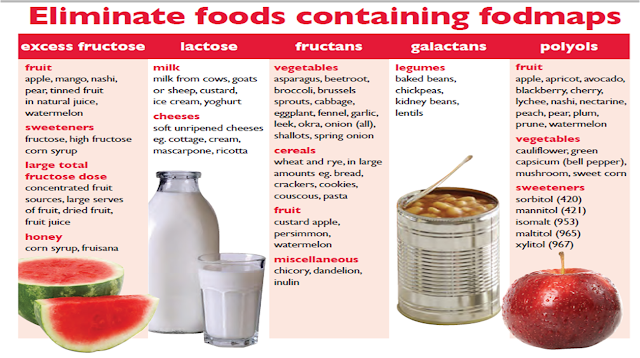
- fructose- found in fruits, honey, high fructose corn syrup, etc.
- lactose- found in dairy products, fructans found in wheat, garlic, onion, inulin, etc.
- galactans- found in legumes such as beans, lentils, soybeans, etc.
- polyols- sweeteners containing isomalt, mannitol, sorbitol, xylitol, stone fruits such as avocado, apricots, cherries, nectarines, peaches, plums, etc.
According to the Stanford University Digestive Health Center for Nutritional Services, FODMAPs pull water into the intestines and may not be absorbed or digested well into our bodies. The theory states that when these foods are eaten in excess these foods could be fermented by the bacteria already in our intestinal tract causing digestive issues. People who are sensitive to FODMAPs often suffer from diarrhea, constipation, gas, bloating and/or cramping. The FODMAP diet is often associated with people suffering from Irritable Bowel Syndrome (IBS). The theory states that these symptoms will lessen if the person eats a diet that is low in FODMAPs.
What not to eat...
The best way to follow this diet is to eliminate foods containing FODMAPs. Here is a chart of FODMAPs across the spectrum.
What to eat...
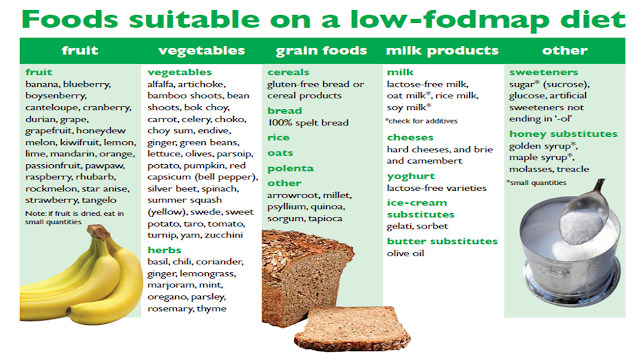
Here are foods that are suitable to eat while on a low FODMAP diet.