Featured Transformation

Showing posts with label theory. Show all posts

2.21.2016

The FODMAP Diet

What does FODMAP stand for?
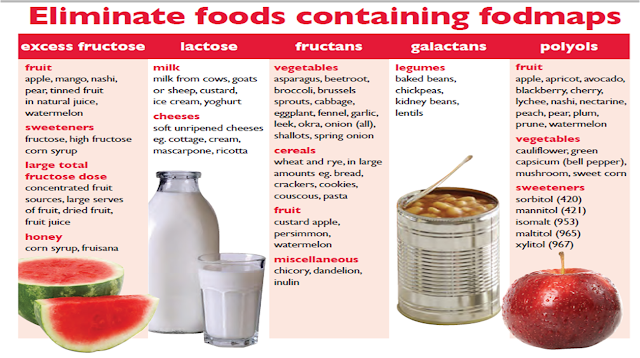
     FODMAPs are carbohydrates, or sugars, that are found in foods. According to fodmap.com, FODMAP is an acronym that stands for Fermentable: foods that are broken down by bacteria in the large bowel, Oligosaccharides: molecules that are comprised of individual sugars that are joined together, Disaccharides: double sugar molecules, Monosaccharides: single-sugar molecules And Polyols: sugar alcohols. These foods include;
  • fructose- found in fruits, honey, high fructose corn syrup, etc.
  • lactose- found in dairy products, fructans found in wheat, garlic, onion, inulin, etc.
  • galactans- found in legumes such as beans, lentils, soybeans, etc.
  • polyols- sweeteners containing isomalt, mannitol, sorbitol, xylitol, stone fruits such as  avocado, apricots, cherries, nectarines, peaches, plums, etc.     
The theory behind it...
      According to the Stanford University Digestive Health Center for Nutritional Services,  FODMAPs pull water into the intestines and may not be absorbed or digested well into our bodies. The theory states that when these foods are eaten in excess these foods could be fermented by the bacteria already in our intestinal tract causing digestive issues. People who are sensitive to FODMAPs often suffer from diarrhea, constipation, gas, bloating and/or cramping. The FODMAP diet is often associated with people suffering from Irritable Bowel Syndrome (IBS). The theory states that these symptoms will lessen if the person eats a diet that is low in FODMAPs.

What not to eat...
     The best way to follow this diet is to eliminate foods containing FODMAPs. Here is a chart of FODMAPs across the spectrum.


What to eat...
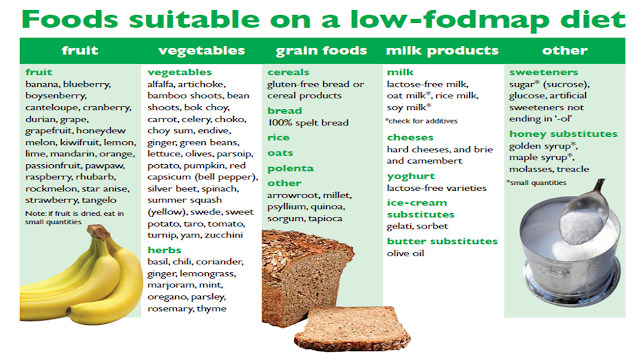
     Here are foods that are suitable to eat while on a low FODMAP diet.


1.07.2016

The Antibacterial Diet

What is bacteria?
     Our bodies contain trillions of bacteria and other microorganisms in our skin, genital areas, mouth and intestines. According to scientificamerican.com, bacteria in its "normal" state is meant to "[offer] vital help with basic physiological processes - from digestion to growth to self defense."

The theory behind it.
     Sometimes, there is an overgrowth of bacteria in one's body. The most bacteria lie in the intestines, which are supposed to aid in digestion. There is a digestive disorder called Small Intestinal Bacterial Overgrowth (SIBO) where more bacteria are found in the small intestine than normal and not the type that are usually there. In our bodies there is an action that moves the bacteria from the small intestine into other parts for digestion, when this action is interfered with bacteria builds up and multiplies in the small intestine. This causes gas, bloating, diarrhea, constipation or abdominal pain. It may also interfere with the absorption of food and essential nutrients possibly leading to weight loss. SIBO can be caused by diabetes, scleroderma, previous surgery that left adhesions or scarring in the intestine, Chron's disease or diverticulitis. (WebMD) According to celiacmd.com certain medical conditions can also lead to someone having SIBO such as liver or pancreas disease, Celiac Disease, non-celiac sensitivity, inflammatory bowel disease, hypothyroidism, irritable bowel syndrome, chemotherapy, chronic antibiotic use, immunosuppressed states (AIDS, cancer, chronic steroid use, etc.), other chronic disease or the chronic use of acid blocking medication. If you are unaware that you have food sensitivities and continually eat those foods for an extended period of time, you can develop SIBO.

What not to eat.
  • food you are personally sensitive to, especially those of us who are gluten or dairy sensitive
  • avoid refined sugars and sweeteners
  • limit legumes (beans, lentils, peas, etc.)
  • dairy products
  • grain products
  • starchy vegetables
What to eat.
  • Top natural antibacterial foods and herbs to eat according to youngandraw.com and motherearthliving.com
    • garlic
    • onions
    • coconut oil
    • ginger
    • fermented foods
    • lemons
    • horseradish
    • pineapple
    • turmeric
    • honey
    • cabbage
    • cranberries
    • oregano
    • peppermint
    • basil      
There are some acceptable diets to slow down bacterial overgrowth:

1.02.2016

The Anti-Inflammatory Diet

What is inflammation?
     In a "normal" body inflammation is when your white blood cells and the things they produce protect your body against infection. This is called acute inflammation. However, in other cases the immune system triggers this response even when there are no infections in the body. This is called chronic inflammation, in which the immune system actually causes damage to its own cells and tissues within the body.

The theory behind it...
     Chronic inflammation can cause many chronic diseases such as heart disease, cancer and Alzeheimer's disease. This can happen due to stress, your genes, lack of exercise, being overweight, sedentary lifestyle, lack of sleep, exposure to toxins such as smoke and of course, your diet choices. The theory states that if you eat an anti-inflammatory diet it could reduce pain in joints, lower blood pressure, reduce the risk of heart disease and other cardiac problems. Eating foods that cause inflammation can therefore do the opposite. 

What not to eat.
    The Conscious Life details some of the worst inflammatory foods that can cause chronic inflammation.
  • Trans fats-look for trans fats, hydrogenated or partially hydrogenated oils, these can cause inflammation by destroying the cells in your blood vessels
  • sugar-too much can send extra inflammatory sensors to your body
  • white flour-diets high in refined grains lead to a higher concentration of inflammation in the body
  • animal fats-eating a diet high in meats (beef, pork or poultry) can cause an inflammatory response and tissue damage
  • alcohol-drinking too much can allow bacteria to easily pass through your intestine and cause irritation and inflammation
  • omega-6 fatty acids-eating too much, found mainly in soy, nuts and seeds, causes an imbalance of omega-3 fatty acids causing inflammation
  • milk-whole milk or even 2 percent is high in saturated fat causing inflammation
  • gluten-eating any grains causes an inflammatory response especially in the intestines 
What to eat.

     The Conscious Life also details some of the best anti-inflammatory foods that can cause reduce chronic inflammation.
  • Leafy green vegetables
  • turmeric
  • wild-caught salmon
  • shiitake mushrooms
  • green tea
  • papaya
  • blueberry
  • extra virgin olive oil
  • broccoli
  • sweet potato
  • garlic

12.11.2015

The Blood Type Diet

What is blood type? 
     Your blood type, or blood group, is "...determined by the presence or absence of certain antigens - substances that can trigger an immune response if they are foreign to the body" (www.redcrossblood.org). Your blood type is inherited from your biological parents, like any other gene, which is used medically for safe blood transfusions. There are four groups of blood types, Group A, Group B, Group AB and Group O. (www.redcrossblood.org)

The theory behind it...
     Dr. Peter J. D'Adamo has created The Blood Type Diet based on scientific research,  "...that indicates that your blood type is a key genetic factor that influences many areas of health and well-being" (www.dadamo.com). The theory states that each blood type requires a specific diet to meet their genetic needs. Even though we are all living in the present, our blood groups date back to our ancestors. Genetics have been passed down from generation to generation resulting in certain characteristics in each of us. People who are blood type O, A, B, or AB all have different characteristics, they are predisposed to different diseases and should eat and exercise differently. (www.dadamo.com)

Blood Type O
     This blood type may be susceptible to certain illnesses such as ulcers and thyroid disorders. Most people with type O blood group contain higher levels of stomach acid than those of other blood types. Also, people with this blood type have a well developed capacity to digest meals that have both protein and fat. However, simple carbohydrates (especially from grains) are more likely to be converted into fat. These grains contain proteins that usually cause inflammation and autoimmunity in people with type O blood. (www.dadamo.com)
     What to eat: high protein diet with a lot of lean meat, poultry, fish, and vegetables (WebMD)
     What not to eat: limit grains, beans, and dairy (WebMD)

Blood Type A
     This blood type has low levels of acid in their stomach and large amount of digestive enzymes, which allows for better digestion of carbohydrates. Type As have a difficult time digesting and metabolizing meat. (www.dadamo.com)
     What to eat: a lot of fruits and vegetables, beans, legumes and whole grains (WebMD)
     What not to eat: meat (WebMD)

Blood Type B
     Weight gain from this blood type are most affected by corn, wheat, buckwheat, lentils, tomatoes, peanuts and sesame seeds. These foods negatively affect the type Bs metabolism resulting in fatigue, retention of fluid and severe drops in blood sugar (hypoglycemia). Type Bs should also avoid chicken, which when digested, attacks the bloodstream potentially leading to stroke and immune disorders. (www.dadamo.com)
     What to eat: green vegetables, eggs, certain meats (goat, lamb, mutton, rabbit and venison) and low-fat dairy products (WebMD)
     What not to eat: corn, wheat, buckwheat, lentils, tomatoes, peanuts, sesame seeds and chicken (WebMD)

Blood Type AB
     This is the newest and rarest blood type. Less than five percent of the population is AB blood type. They have characteristics of both A and B blood types. This blood type has type As low stomach acid and type Bs adaptation to eating meat. Therefore, meat that this blood type eats, usually gets stored as fat. (www.dadamo.com)
     What to eat: tofu, seafood, dairy and green vegetables (WebMD)
     What not to eat: caffeine, alcohol and smoked or cured meats (WebMD)

 Dr. D'Adamo outlines a "get started" plan for each blood type.


For more information check out Dr. D'Adamo's webstite http://dadamo.com/

11.30.2015

The Acid Alkaline Diet

What is acid and alkaline and what does it have to do with my food? 
     Acidic and alkaline (basic) are two terms to describe chemicals. They are measured on a scale called a pH scale, which measures how acidic or basic a substance is. Technically, pH is the measure of the hydrogen ion concentration in something. Solutions with a high concentration of hydrogen ions have a low pH (alkaline) and solutions with a low concentration of hydrogen ions have a high pH (acidic). The pH scale ranges from 0 to 14, 0 being very acidic and 14 being very basic. In terms of any substance, or the food we eat, acidic foods range from 0 to 7 and alkaline foods range from 7 to 14.

The theory behind it...
     Naturally our bodies are slightly alkaline, a little more than 7 on the pH scale. This theory states that eating acidic foods changes your body's naturally alkaline state to an acidic one, creating health problems. According to www.acidalkalinediet.net, eating a diet high in acidic foods creates a condition called chronic acidosis. This cuts off oxygen within your body's cells and negatively impacts your immune system. The claim is that, "this leads to all sorts of diseases such as cancer, heart disease, stroke, memory loss, nutrient deficiencies and poor athletic performance....[because acidic foods] violate the acid/alkaline blood rations of your body cells." Therefore, eating a diet that is higher in alkaline foods than acidic ones will promote a healthier state of your body, possibly leading to weight loss, prevention of diseases, slowing down the aging process and stimulating optimum health.

What not to eat. What to eat. 
     pHreshproducts.com has a nice chart to show what foods are acidic and what are alkaline. The diet promotes a ratio of alkaline to acidic foods, throughout your daily meals and beverages some promote an 80% alkaline foods to 20% acidic food ratio, others promote a 60/40 ratio.

10.25.2015

The Paleo Diet

What does it mean to be Paleo?
     Paleo is short for Paleolithic, which refers to the prehistoric time period about 2.6 million years ago where our ancestors developed the most primitive stone tools. The Paleo diet is based on the types of foods our ancestors would have eaten during this time consisting of meat, fish, vegetables and fruit. The diet restricts the consumption of grains, dairy and all processed foods.

The theory behind it...
     During the "caveman" days humans ate very differently than we do today. Our ancestors were hunters and gathers and only ate what they could hunt or find. According to nerdfitness.com, "The average [human] back then [was] tall, muscular, agile, athletic and incredibly versatile. The average [human] now [is] overweight, out of shape, stressed out, unhappy, sleep deprived and dying from a myriad of preventable diseases....66% of us are overweight 33% are considered obese and those numbers are only getting worse." The thing that changed was agriculture. Our bodies have not yet adapted to all of the grains we are farming. Our bodies are still adapted to being hunter-gatherers. The Paleo diet attempts to get the body back to our biological blueprint in order to eat and live healthier.

What not to eat.
     All grain products, dairy products, starches, legumes and processed foods or sugars.

What to eat. 
     Robbwolf.com details what to eat on the Paleo diet:

LEAN PROTEINS

Lean proteins support strong muscles, healthy bones and optimal immune function. Protein also makes you feel satisfied between meals.

FRUITS AND VEGETABLES

Fruits and vegetables are rich in antioxidants, vitamins, minerals and phytonutrients that have been shown to decrease the likelihood of developing a number of degenerative diseases including cancer, diabetes and neurological decline.
Okay To EatAvoid
FruitsDairy
VegetablesGrains
Lean MeatsProcessed Food & Sugars
SeafoodLegumes
Nuts & SeedsStarches
Healthy FatsAlcohol

HEALTHY FATS FROM NUTS, SEEDS, AVOCADOS, OLIVE OIL, FISH OIL AND GRASS-FED MEAT

Scientific research and epidemiological studies show that diets rich in Monounsaturated and Omega-3 fats dramatically reduce the instances of obesity, cancer, diabetes, heart disease and cognitive decline.
Saturated fat has been demonized by our health authorities and media. What is the basis for this position on Saturated fat? Are current recommendations for VERY low saturated fat intake justified? How much saturated fat (and what types), if any should one eat? Without a historical and scientific perspective these questions can be nearly impossible to answer. In this paper Prof. Cordain looks at the amounts and types of saturated fats found in the ancestral diet: Saturated fat consumption in ancestral human diets: implications for contemporary intakes.
One of the greatest deviations away from our ancestral diet is the amounts and types of fat found in modern grain feed animals vs. the amounts and types of fats found in grass fed or wild meat, fowl and fish. What we observe is wild meat is remarkably lean, and has relatively low amounts of saturated fats, while supplying significant amounts of beneficial omega-3 fats such as EPA and DHA. In this paper Prof. Cordain and his team analyze the complete fatty acid profile from several species of wild deer and elk. The take home message is that free range meat is far healthier than conventional meat: Fatty acid analysis of wild ruminant tissues: Evolutionary implications for reducing diet-related chronic disease.

The Grain Free Diet

How is the grain free diet different from gluten free diet?
     The grain free diet excludes the consumption of any grain in your diet. While the gluten free diet focuses mainly on not eating wheat, barley and rye, the grain free diet excludes all grains including barley, corn, durum, kamut, millet, oats, rice, rye, sorghum, spelt, tuff, triticale, wheat (any kind) wild rice, any whole grains, and pseudo grains, like amaranth, buckwheat, chia and quinoa. The grain free diet excludes all of these grains and any foods that may be derived from these foods.

The theory behind it...
     Gluten is a mixture of proteins found in grains, which is comprised of two parts; prolamines and glutelins. There is a kind of prolamine in gluten called gliadin, but all grains have prolamines in them, so all grains contain a form of gluten, in different concentrations. Wheat and corn have the highest concentration of gluten. (gluten free society) This is why wheat is the most detrimental of the grains. The goal of the grain free diet is to rid the body of all grains that would cause adverse effects. Our bodies were not initially adapted to eating grains, especially in large amounts. Humans have only been eating grains for the past about 10,000 years since the invention of agriculture. This may seem like a long time, but thinking about evolution, our ancestors have been around for six million years, while modern humans have existed for about 200,000 years. It takes tens of thousands of years to affect our genes. In order for the body to avoid the detrimental effects of gluten the grain free diet restricts all consumption of grains and any foods that are derived from grains. Dr. Peter Osborne is one of the leading authorities on grain free living, he calls this diet the "true gluten free diet." Visit his website, Gluten Free Society for more information.

What not to eat.
     Grainfreeliving.com gives a list of foods that contains grains

Foods that are considered grains, (or are made from grains) are:
  • Wheat
  • Rye
  • Barley, including barley malt
  • Bran
  • Bulgar
  • Couscous
  • Farina
  • Kamut
  • Orzo
  • Semolina
  • Sorghum (gluten-free)
  • Spelt
  • Corn (gluten-free)
  • Cornflour (gluten-free unless wheaten cornflour)
  • Cornmeal (gluten-free)
  • Millet – The Body Ecology diet says it is a pseudo-cereal, a gluten free grain like seed.  However it is a member of the plant family Poaceae, of which the other cereal grasses belong and is generally recognized as a grain in most sources I have checked.  Because of this I have listed it on the grain list and it is up to your own research/opinion as to whether you choose to treat it as a grain or not.
  • Rice (gluten-free)
  • Wild Rice (gluten-free, this one is open to debate also – some people swear it is a grain, some people swear it isn’t and is in fact another one of the grain-like seeds.  I treat it as a grain myself but you are welcome to decide otherwise.  See also Millet above)
  • Oats
  • Beer (yes, beer!)
  • Glucose made from wheat
  • Teff (gluten-free)
  • Montina flour
  • Graham flour (wheat)
  • Commercially made stock: like chicken, beef or vegetable stock in either powder or liquid usually contains some kind of grain.
  • Soy Sauce (contains wheat)
  • (this list is incomplete, if I tried to make it complete it would be a list of thousands of items and be unreadable)

So any thing made from these products would also contain grains – like cakes, biscuits, pizzas, bread, pasta, breadcrumbs, spaghetti, sauces, soy sauce, sauces or processed drinks etc
Foods that are grain free, even though they are often used as a flour or look a bit like a grain are:
  • Almond meal or any other nut meal. (OK for paleo, GAPS or SCD)
  • Amaranth – is grain like seed, from the broadleaf (dicot) plant family. (OK for Body Ecology, or if tolerated, not paleo or GAPS). Is generally treated as a grain when discussing due to being cooked and used much the same way as cereal grains, but is in class Magnoliopsida, while the cereal grain family Poaceae stems from class Liliopsida.
  • Arrowroot
  • Buckwheat also called Kasha – is grain like seed, related to rhubarb, from the broadleaf (dicot) plant family. (OK for Body Ecology, or if tolerated, not paleo or GAPS). Is generally treated as a grain when discussing due to being cooked and used much the same way as cereal grains, but is in class Magnoliopsida, while family Poaceae stems from class Liliopsida.
  • Cassava
  • Chickpeas (made into flour)
  • Coconut (used in flours) (OK for paleo, GAPS or SCD)
  • Cottonseed
  • Dal
  • Fava bean
  • Flaxseed (OK for paleo, GAPS or SCD)
  • Gram flour (chickpea)
  • Lentils
  • Manioc
  • Potato Starch/Flour
  • Quinoa – is grain like seed, from the broadleaf (dicot) plant family. (OK for Body Ecology, or if tolerated, not paleo or GAPS). Is generally treated as a grain when discussing due to being cooked and used much the same way as cereal grains, but is in class Magnoliopsida, while family Poaceaestems from class Liliopsida.
  • Sago
  • Sesame – seed
  • Sunflower seed flour
  • Taro flour
  • Soy flour
  • Tapioca
  • Glucose make from tapioca
  • Plantain flour (can get at African grocers)
  • Yam (iyan) flour (can get at African grocers)
  • Mesquite flour
So any thing made from these products would be technically be grain-free (but not necessarily ok to consume – for many people they would still cause problems for various reasons).  For example, bread, cakes or pasta made from grain-free flours do not contain grains.  Reading ingredients is therefore important.
Grain free foods are also automatically gluten-free.
Just because something is “technically” not a grain, doesn’t make it automatically ok for many people.  Paleo peeps or GAPS-diet folk wouldn’t touch any of the grain-like seeds or most of the starchy grain free alternatives in the above “not a grain list”.  It’s really just the nuts and seeds for them.  For myself, I do ok on soaked & sprouted quinoa, amaranth, buckwheat and millet, so I eat them sometimes, although not everyday.

What to eat.
     Dairy products or anything derived from an animal, such as milk, cheese, butter or meat (with no additives), all fruits and vegetables except for corn (this is technically a grain).

10.21.2015

The Gluten Free Diet

What is gluten? 
     I always tell people that gluten is like the glue that holds bread together. Gluten is a protein found in grains that helps foods maintain their shape. Gluten can be found in many grains, but the biggest offenders are wheat, barley and rye.  

The theory behind it: 
     Gluten is primarily avoided to treat the autoimmune disease called Celiac disease, in which the protein (gluten) causes inflammation in the intestines of people with the disease. Basically, the immune system thinks gluten is an enemy and tries to fight it off. It triggers an autoimmune response which damages the small intestines and initially causes gastrointestinal symptoms such as bloating, gas and diarrhea. It also affects how a person absorbs nutrients from the food they eat. People who are sensitive to gluten and eat it cannot absorb the proper nutrients they need to. This can lead to weight loss, anemia, chronic fatigue, osteoporosis, infertility, miscarriage, skin rashes, headaches, depression and joint pain. However, gluten causes inflammation in anyone who is sensitive to eating gluten, not just those who have Celiac. Gluten can leak into the bloodstream, causing inflammation in any part of the body. It can end up attacking other organs and actually cause heart disease or other autoimmune diseases like diabetes. 

What not to eat:
     Gluten Free Living provides a list of foods containing gluten.

NO

Wheat in all forms including spelt, kamut, triticale (a combination of wheat and rye), durum, einkorn, farina,semolina, cake flour, matzo (or matzah) and couscous. Wheat is found in many bread, cakes, cereals, cookies, crackers, pretzels, pasta, and pizza crusts, but it can turn up in other products, too. Read labels to be sure.
Most ingredients with “wheat” in the name including hydrolyzed wheat protein and pregelatinized wheat protein. Buckwheat, which is gluten free, is an exception.
Barley and malt, which is usually made from barley, including malt syrup, malt extract, malt flavoring and malt vinegar.
Rye, which is most often found in bread products. It is not typically used to make ingredients.
Breaded or floured meat, poultry, seafood and vegetables, when the breading is made with wheat. Also meat, poultry and vegetables when they have a sauce or marinade that contains gluten, such as soy and teriyaki sauces.
Foods that are fried in the same oil as breaded products are not considered to be safe on the gluten free diet.
Licorice, which is made with wheat flour, and other candies that contain wheat or barley.

MAYBE

Beer is gluten-free when made from gluten-free grains. Beer made from barley and processed to remove gluten is not considered to be gluten free.
Dextrin can be made from wheat, which would be noted on the label, and would not be gluten free.
Flavorings are usually gluten free, but in rare instances can contain wheat or barley. By law, wheat would have to be labeled in foods regulated by the Food and Drug Administration (FDA). Barley is usually called malt flavoring. In extremely rare instances, neither barley nor malt is specified when used in a flavoring.
Modified food starch is gluten free, except when wheat is noted on the label, either as “modified wheat starch,” modified starch (wheat) or if the “Contains” statement at the end of the ingredients list includes wheat.
Wheat starch is allowed in gluten-free foods if the wheat starch has been processed to remove the gluten protein. In addition to a gluten-free label, the packaging of any product using safe wheat starch will note that it has been processed to meet FDA gluten-free standards. Wheat starch in foods that do not also have a gluten-free label are not safe on the gluten-free diet.
Oats are considered safe on the gluten-free diet if they have been specially processed to prevent cross-contamination by gluten-containing grains. These oats are labeled gluten free. Mainstream oats, including those commonly used in breakfast cereals, are not considered safe unless they are labeled gluten free.
Oats are allowed as an ingredient in products labeled gluten-free as long as the final food meets the FDA gluten-free standard. This includes granola, granola bars, cookies and other products. Products that are made with oats but do not have a gluten-free label are not gluten free.
Prescription and over-the-counter drugs can contain gluten, although most are gluten free. Check with the pharmaceutical company, especially if you take the medication on a continuing basis.
Processed cheese (spray cheese, for example) may contain gluten. Real cheese is gluten free.
Seasonings and seasoning mixes can contain gluten. Wheat will be noted on the label as required by law.
Soy sauce is usually fermented from wheat. Only soy sauce made without wheat is gluten free. Look for soy sauce with a gluten-free label.

SPECIAL CASES

Caramel color is almost always made from corn, and most companies in North America use corn because it makes a better product. Malt syrup can be used but rarely is, so caramel color is almost guaranteed to be gluten free.
Hydrolyzed vegetable protein is a phrase that under federal regulation should not be used on a food label. Food processors have to identify the “vegetable.” So you might read “hydrolyzed wheat protein,” which would not be gluten free, or “hydrolyzed soy protein,” which is gluten free.
What to eat:
  Gluten Free Living provides a list of foods that are acceptable on a gluten free diet. 

YES

Foods made from grains (and grain-like plants) that do not contain harmful gluten, including:
  • Corn in all forms (corn flour, corn meal, grits, etc.).
  • Plain rice in all forms (white, brown, wild, basmati, enriched rice, etc.).
  • Amaranth, arrowroot, buckwheat (kasha), cassava, flax, millet, quinoa, sorghum, soy, tapioca and teff.
  • Flours made from gluten-free grain, nuts, beans and coconut. Look for products labeled gluten-free to avoid cross-contamination.
Gluten-free ingredients:
Annatto, glucose syrup, lecithin, maltodextrin (even when it is made from wheat), oat gum, plain spices, silicon dioxide, starch, food starch and vinegar (only malt vinegar might contain gluten). Also citric, lactic and malic acids as well as sucrose, dextrose and lactose; and these baking products: arrowroot, cornstarch, guar and xanthan gums, tapioca flour or starch, potato starch flour and potato starch, vanilla.
The following foods:
  • Milk, butter, margarine, real cheese, plain yogurt, most ice cream without gluten-containing add-ins.
  • Vegetable oils, including canola.
  • Plain fruits, vegetables (fresh, frozen and canned), meat, seafood, potatoes, eggs, nuts, nut butters, beans and legumes.
  • Distilled vinegar is gluten free. (See malt vinegar under NO below).
  • Distilled alcoholic beverages are gluten free because distillation effectively removes gluten. They are not gluten free if gluten-containing ingredients are added after distillation, but this rarely happens.
  • Mono and diglycerides are fats and are gluten free.
  • Spices are gluten free. If there is no ingredient list on the container, it contains only the pure spice noted on the label.